

Designing for Comfort and Physical Health
When we hear the word “ergonomics,” our minds often jump to the office: the perfect chair, the standing desk, the keyboard that prevents wrist strain. But what about the spaces where we spend the majority of our lives? The principles of ergonomics, designing for efficiency and comfort in the working environment, are just as critical at home.
Applying ergonomics to our homes is not a luxury; it’s a crucial investment in our long-term physical health and daily comfort. It’s about creating spaces that support the body, rather than strain it. Let’s move beyond the home office and explore how to apply these principles to the most important rooms in your house.
The Kitchen
The kitchen is a high-activity workspace. We spend hours chopping, lifting, and moving within it. A poorly designed kitchen can easily lead to back pain, shoulder strain, and general fatigue.
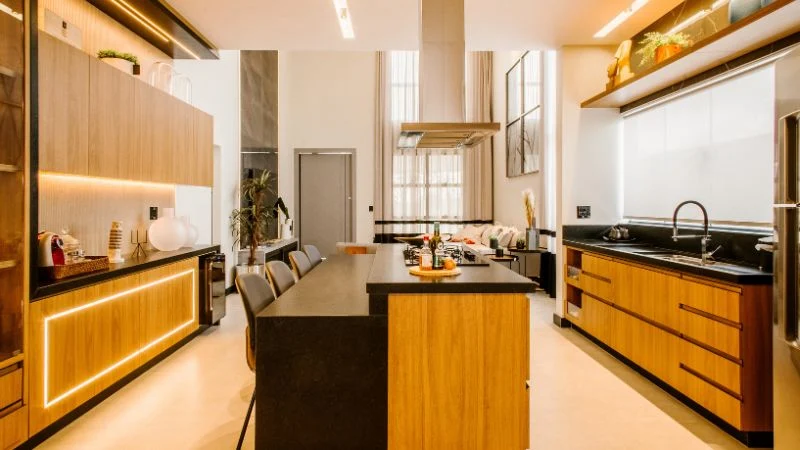
Countertop height is key
The standard countertop height is about 91 cm (36 inches), but this “one-size-fits-all” approach doesn’t work for everyone. The ideal height allows you to work with your arms bent at a comfortable angle without hunching over. As experts at the Cornell University Ergonomics Web explain, different tasks can even require different heights. For example, a slightly lower surface is better for tasks requiring force, like kneading dough, while a higher surface can be better for precision work.
Smart layout and storage
The classic “kitchen work triangle,” the path between the stove, sink, and refrigerator, was developed to minimize steps and increase efficiency. This principle can be enhanced with smart storage. Heavy items like pots and pans should be stored between hip and shoulder height to avoid deep bending or over-reaching. Frequently used utensils and spices should be easily accessible, reducing repetitive straining during meal preparation.
The Living Room
Your living room is for unwinding, but “relaxing” in a poorly designed space can actually be detrimental to your posture and physical health.

The science of seating
That deep, plush sofa might look inviting, but if it doesn’t offer proper support, it could be contributing to back pain. According to health resources from institutions like the Mayo Clinic, proper seating should support the natural curve of your spine. When choosing sofas and chairs, look for good lumbar support, a seat depth that allows your feet to rest flat on the floor with your knees at a 90-degree angle, and armrests that let your shoulders relax.
Mindful media placement
Craning your neck to see the television is a common cause of pain. For optimal viewing, the center of your screen should be at or slightly below eye level when you are seated. This simple adjustment prevents the chronic neck and shoulder strain that comes from looking up or down for extended periods.
The Bedroom
We spend roughly a third of our lives sleeping, making the bedroom arguably the most important ergonomic space in the home for our overall health.

Mattress and pillows
Your mattress and pillows are crucial for maintaining proper spinal alignment while you sleep. A mattress should be firm enough to support your spine’s natural curves but soft enough to conform to your body’s shape. The goal is to keep your spine in a neutral, straight position throughout the night. The Human Factors and Ergonomics Society notes that the right sleep setup is highly individual, so it’s essential to find what works for your body type and preferred sleep style.
Creating effortless flow
Ergonomics in the bedroom also involves the room’s layout. There should be clear, easy pathways around the bed to prevent trips, especially in the dark. Bedside tables should be roughly the same height as the top of your mattress, making it easy to reach for a glass of water or turn off a lamp without twisting or straining your body.
Building a healthier home, one detail at a time
Ergonomic design is a thoughtful, proactive approach to well-being. It is found in the height of your countertops, the support of your sofa, and the layout of your bedroom. By making these intentional choices, you create an environment that actively contributes to your health and comfort.
You don’t need a complete overhaul to start. Begin by assessing one room and identifying small areas for improvement. These mindful adjustments can accumulate over time, resulting in a home that not only looks good but feels good to live in, a space that truly supports your well-being.
