
There is a particular kind of suffering that Lagos homeowners know well. You finish work, you come home, you want silence. Then the neighbour’s 10KVA generator fires up at 9pm and stays on until 2am.
You didn’t buy that generator. You don’t use it. But you are absolutely living with it.
This is an acoustic design problem. And most Nigerian homes are completely unprepared for it.
What Acoustic Design Actually Is
Acoustic design is the practice of controlling how sound moves through and around a space. It covers two main concerns: keeping unwanted sound out, and managing how sound behaves inside a room.
Most people hear “acoustic design” and think of recording studios or concert halls. It applies just as much to a flat in Lekki or a detached house in Omole.
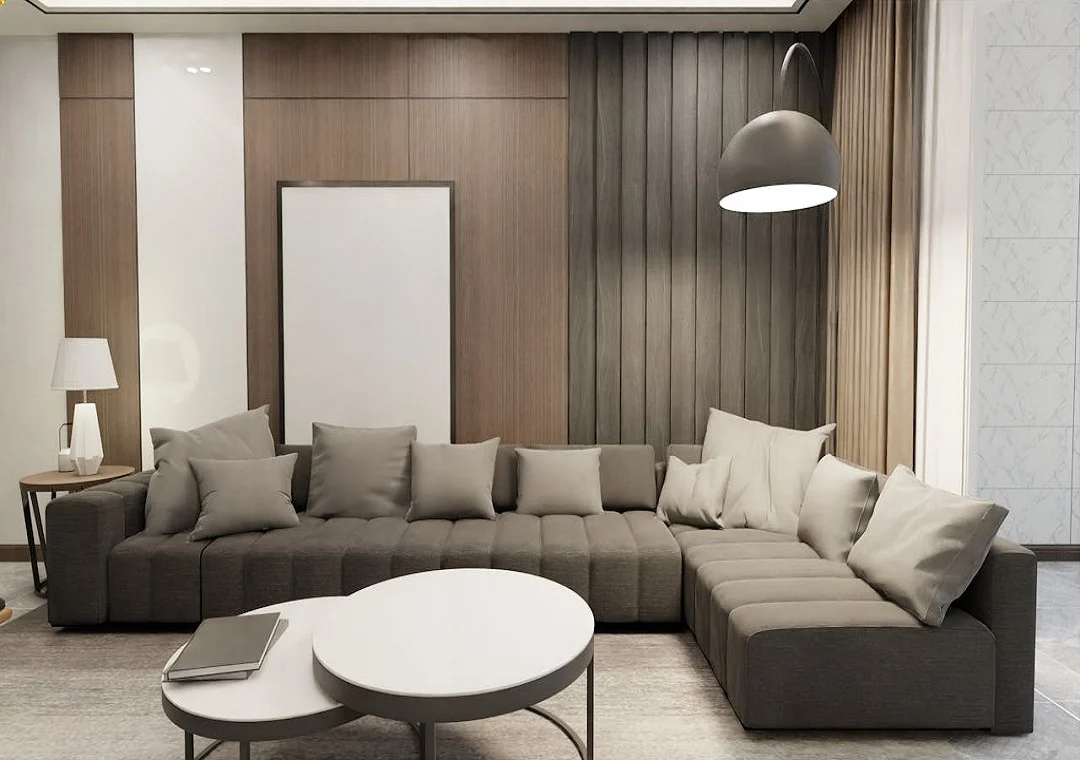
Every material in your home affects sound. Hard surfaces like bare concrete, ceramic tiles, and glass reflect sound. They make noise bounce around a room and feel louder. Soft materials like rugs, fabric sofas, curtains, and wall panels absorb sound. They reduce echo and dampen noise.
A room with no soft furnishings is an acoustic nightmare. A room designed with the right combination of hard and soft surfaces can feel calm even in a noisy environment.
The Lagos Noise Problem Is Not Going Away
Lagos is one of the loudest urban environments in the world. This is not an opinion. Studies on urban noise pollution consistently rank West African megacities among the highest in ambient noise levels globally.
The sources are everywhere. Generators running most of the day in residential areas. Traffic on every arterial road. Hawkers, churches, mosques, event centres, construction sites, and the general density of millions of people living close together.
Most Nigerians have simply accepted this as normal. The assumption is that noise is part of Lagos life and you cannot do much about it inside your own home.
That assumption is wrong.
You cannot eliminate every sound from outside. The goal of acoustic design is to reduce intrusion to a level that does not affect how you sleep, concentrate, relax, or work from home. That goal is achievable in any Lagos property with the right interventions.
How Noise Gets Into Your Home
Understanding how sound travels helps you understand where to address it.
Sound moves through two main pathways: airborne transmission and structure-borne transmission.
Airborne noise travels through the air, finds gaps, and enters your space through windows, vents, door frames, or thin walls. Your neighbour’s generator sound comes in this way. So does traffic noise, party music from nearby, and mosque announcements at 5am.
Structure-borne noise travels through solid materials. Footsteps from the flat above you. Vibration from heavy machinery nearby. The thud when someone slams a door down the corridor.
Most Lagos homes have both problems. Old construction often uses single-leaf block walls with no insulation layer. Windows are single-glazed louvres with visible gaps. Doors are hollow-core with no acoustic seal at the threshold.
Every one of those is an entry point for noise.
What You Can Actually Do About It
Acoustic improvement does not require tearing down your home and starting again. There are interventions at different budget levels, from simple to comprehensive.
Window treatment is usually the first and most impactful step. Replacing louvre windows with sealed casement windows reduces airborne noise significantly. Adding heavy lined curtains on top of that absorbs what gets through. For homes near major roads, secondary glazing adds another layer of separation between outside and inside.
Wall treatment is the next consideration. Adding mass to a wall increases its ability to block sound. Options range from adding an extra layer of dense plasterboard on the interior face of an external wall, to installing acoustic panels in specific rooms. In a bedroom, even a large upholstered headboard against an external wall helps absorb sound before it reaches your ear.
Floor and ceiling treatment matters most in multi-storey buildings and blocks of flats. A tiled floor with no underlay transmits every footstep from above. Adding a rug with a thick pad underneath reduces this considerably. Suspended ceilings with an air gap between the slab and the ceiling layer also reduce impact noise from above.
Door sealing is the most underrated fix. Most interior and exterior doors in Nigerian homes have visible gaps at the bottom and sides. Those gaps let sound travel freely. Acoustic door seals and threshold strips are inexpensive and make an immediate difference.
Soft furnishing strategy is relevant for every room. A room with a sofa, curtains, a rug, and wall art will feel quieter than the same room with bare surfaces, even with identical noise levels outside. The materials absorb echo and reduce the perception of noise. This is not decoration. It is physics.
Why This Matters More Than Most Homeowners Realise
Chronic noise exposure has documented effects on health. Disrupted sleep, elevated stress hormones, reduced concentration, and increased blood pressure are all linked to sustained exposure to noise above certain thresholds.
A generator running outside your bedroom window at night can produce 70 to 85 decibels depending on its size and distance. The World Health Organisation recommends bedroom noise levels below 30 decibels for quality sleep.
That gap is significant. And it is playing out in millions of Lagos homes every night.
When Ishanose designs or renovates a space, acoustic performance is part of the brief. Not as an afterthought. It shapes material choices, window specifications, wall build-up details, and furniture placement from the beginning.
A home that looks beautiful and sounds chaotic is an incomplete design. The goal is a space that works for the people living in it, in the city they actually live in.
And here is my conclusion
Your neighbour’s generator is not going anywhere. NEPA is not going to fix the power situation next week. The traffic on Ozumba Mbadiwe will still be there tomorrow.
What you can control is how much of that noise reaches you inside your own home.
Acoustic design is not a luxury product. It is a practical set of decisions about materials, construction details, and furnishing choices. Some of those decisions cost very little. Others require investment. All of them are worth understanding before you build or renovate.
If you are planning a new build, renovation, or interior fit-out in Lagos, ask your designer about acoustic performance. If they look blank, that is important information.
